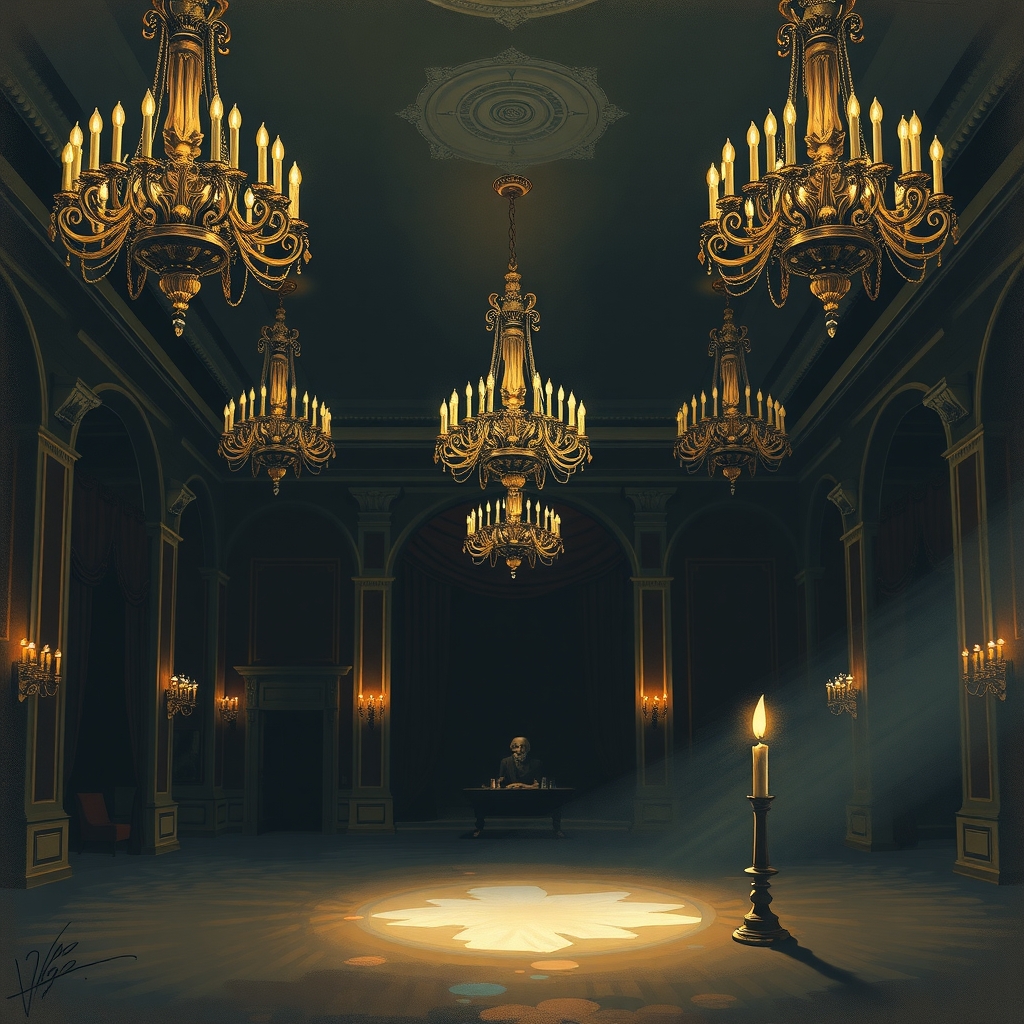
Vanity of mortal things
after Alexander Pope
In grand estates, where opulence does reign A fleeting dream, that swiftly turns to pain The proud possessor, with each new display Seeks to impress, yet fades with end of day
Their lavish feasts, and costly, pompous shows Do serve to mock, their own, impending woes For when the crowd, that gathered to adore Departs, the silence, is a heavy score
And when the master, of the house, does stride Through empty halls, where shadows, darkly reside He finds, that all, his treasures, cannot buy A moment’s peace, from time’s, relentless sigh
I took from Alexander Pope his use of formal, elevated diction and his tendency to critique societal excesses, as seen in his satirical works, and applied it to a new poem that examines the fleeting nature of mortal possessions and the vanity of those who accumulate them. I also drew inspiration from his use of heroic couplets and clever juxtapositions to create a sense of irony and surprise.